by
by 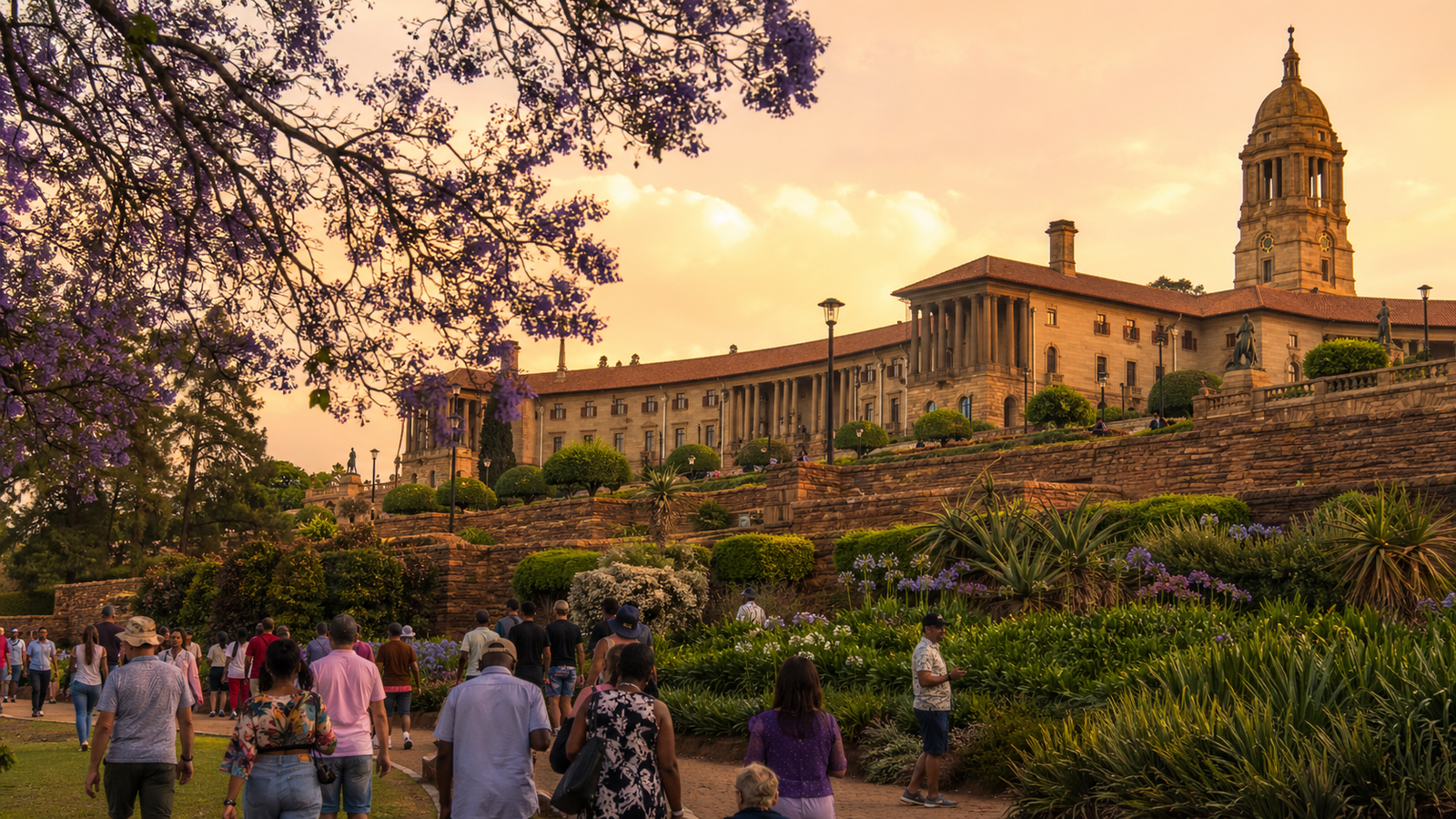
Pretoria — officially known as Tshwane — is one of South Africa’s most liveable, most layered, and most underappreciated cities. While Johannesburg attracts the headlines and Cape Town steals the Instagram likes, Pretoria rewards the curious traveller with something rarer: depth. It is a city where colonial-era architecture meets vibrant township culture, where world-class museums sit alongside jacaranda-lined streets, and where every corner holds a story that shaped a nation. If you only have a few days in Gauteng, make sure Pretoria is on your list — and make sure you do it properly.
Here are ten experiences you simply cannot miss in Tshwane in 2026.
1. Stand at the Union Buildings at Sunset
Herbert Baker’s magnificent sandstone Union Buildings sit atop Meintjieskop hill and serve as the official seat of South Africa’s government. The terraced gardens that cascade down the hillside are open to the public and offer one of the most dramatic viewpoints in the city. At sunset, when the honey-coloured stone glows against a bruised Highveld sky, few places in South Africa feel quite so grand. The bronze statue of Nelson Mandela — arms raised in triumph — stands near the spot where he was inaugurated as the country’s first democratically elected president in May 1994. Standing here, you feel the full weight of that history.
2. Explore the Voortrekker Monument
Visible from much of the city, the severe granite mass of the Voortrekker Monument was built in 1949 to honour the Afrikaner pioneers who trekked inland from the Cape Colony in the 1830s and 1840s. Whatever your political relationship with that history, the monument is an extraordinary architectural and artistic achievement. The interior hall contains a 27-panel marble frieze — the largest of its kind in the world — depicting the Great Trek in extraordinary detail. Every year on 16 December, a single shaft of sunlight passes through the dome and illuminates the cenotaph below. It is a feat of engineering as much as symbolism.
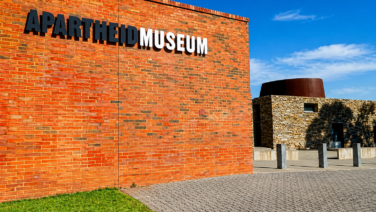
3. Walk Through the Apartheid Museum’s Precursor: Freedom Park
Opened in 2004, Freedom Park is a vast memorial complex on Salvokop hill that commemorates South Africans who died in conflicts from pre-colonial times through to the liberation struggle. The eternal flame burns at the Garden of Remembrance. The names of over 75,000 fallen are etched into the Wall of Names. It is reflective, beautifully designed, and genuinely moving — and it offers a necessary companion to the Apartheid Museum in Johannesburg, broadening the historical lens from resistance to all sacrifice.
4. Lose Yourself in the Jacaranda Season
Between late October and early November, Pretoria transforms. Over 70,000 jacaranda trees break into lavender bloom, carpeting streets, pavements, and parks in a colour that sits somewhere between purple and blue. Nowhere is this more spectacular than along Herbert Baker Street in Groenkloof, or along Church Street in the city centre. If you are visiting during jacaranda season, rent a bicycle and ride through the tree tunnels. If you cannot time your visit perfectly, the JacarandaFest — held annually in October — is a great reason to plan around it.
5. Visit the Pretoria National Zoological Gardens
South Africa’s National Zoo is one of the largest in the world by area, covering 85 hectares and housing over 9,000 animals across 700 species. It is not just a family attraction — it is a world-class conservation facility. The aerial cableway that crosses the zoo offers an extraordinary bird’s-eye perspective, and the nocturnal house, aquarium, and reptile park each deserve serious time. In 2026, the zoo has expanded its conservation education programme significantly, making it a fascinating visit for adults and children alike.
6. Take a Guided Tour of the Historic City Centre
Pretoria’s city centre is a dense archive of architectural styles — Victorian, Edwardian, Cape Dutch Revival, Art Deco, and Brutalist all exist within walking distance of each other. Church Square, at the heart of the city, is anchored by Paul Kruger’s statue and surrounded by buildings that include the old Raadsaal (parliament of the old ZAR republic), the Palace of Justice where Mandela was sentenced to life imprisonment, and the General Post Office. A guided walking or driving tour gives these buildings context and brings the history alive in a way that self-guided wandering simply cannot.
7. Day Trip to the Cullinan Diamond Mine
Just 40 kilometres east of Pretoria, the Cullinan Diamond Mine is where the world’s largest gem-quality diamond was found in 1905. The Premier Mine, as it was then known, produced a stone of 3,106 carats — a rough rock the size of a man’s fist — that was subsequently cut into fragments, the two largest of which are now part of the British Crown Jewels. Surface tours of the mine are available daily and include an extraordinary look at the geology, the history of discovery, and replicas of the most famous stones to come from the earth here. It is one of the most compelling day trips from Pretoria.
8. Experience the Lesedi Cultural Village
About an hour’s drive from Pretoria, Lesedi Cultural Village offers one of South Africa’s most immersive introductions to its diverse indigenous cultures. Five traditional homesteads — representing the Ndebele, Sotho, Xhosa, Zulu, and Pedi peoples — sit within a beautifully landscaped reserve. Guided tours introduce visitors to each culture’s history, traditions, food, and craft. The evening programme includes a multi-tribal dance performance and a traditional dinner. It is theatrical, educational, and genuinely joyful — a place where culture is celebrated rather than merely preserved.
9. Explore Neighbourhoods Like Sunnyside and Hatfield
No city reveals itself through its attractions alone — you have to walk the streets. Sunnyside, immediately east of the city centre, is one of Pretoria’s most cosmopolitan and street-food-rich neighbourhoods, home to large communities of Zimbabweans, Congolese, Nigerians, and Mozambicans alongside long-established Pretoria families. Hatfield, home to the University of Pretoria, has a dense café culture and an excellent Saturday flea market. Between them, these two suburbs offer a taste of the contemporary, multicultural city that Tshwane has become.
10. Book a Sunrise Drive Through the Rietvlei Nature Reserve
Few visitors to Pretoria know that a fully functional game reserve sits within the city limits. Rietvlei Nature Reserve, southeast of the city centre, is home to white rhino, buffalo, zebra, wildebeest, cheetah, and over 250 bird species. Dawn game drives — when the animals are most active and the Highveld light is at its most extraordinary — are available through the reserve. It is not the Kruger. But for a two-hour wildlife encounter that requires no overnight stay and no long-distance travel, it is remarkable.
 by
by