by
by 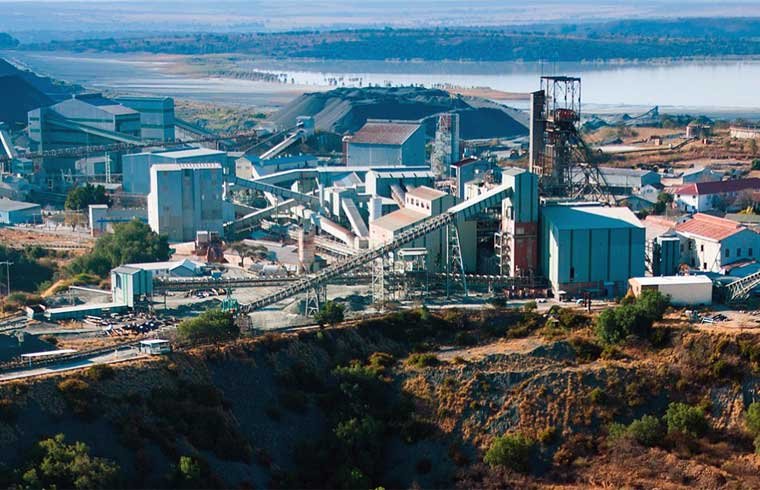
On 26 January 1905, a mine manager named Frederick Wells was doing a routine inspection of the Premier Mine near Cullinan, 40 kilometres east of Pretoria, when he noticed something unusual glinting in the wall of the mine shaft about nine metres below the surface. What he had found was a diamond of 3,106.75 carats — roughly the size of a man’s fist — that would become the largest gem-quality rough diamond ever discovered. The stone was eventually named the Cullinan Diamond, and its story is one of the most extraordinary in the history of human commerce, statecraft, and geology.
Today, the mine — now operated by Petra Diamonds as the Cullinan Mine — continues to produce exceptional blue diamonds and is open for guided surface tours that bring this story dramatically to life.
The Stone That Changed History
The Cullinan Diamond was purchased by the Transvaal government and, in a gesture of loyalty to the British Crown following the Anglo-Boer War, presented to King Edward VII on his 66th birthday in 1907. The king initially had reservations — but allowed the stone to be sent to Amsterdam, where the Asscher Brothers — the most skilled diamond cutters in the world — spent three months studying it before a single blow was struck. On 10 February 1908, Joseph Asscher placed his cleaving blade against a carefully chosen groove in the stone and struck. The blade broke. He struck again — and the stone split perfectly into two major pieces.
From the original rough, nine major stones and 96 smaller brilliants were eventually polished. The two largest — Cullinan I (530.4 carats, the “Star of Africa”) and Cullinan II (317.4 carats, the “Second Star of Africa”) — are now set in the British Crown Jewels. Cullinan I sits in the Sovereign’s Sceptre. Cullinan II is mounted in the Imperial State Crown, worn at the Opening of Parliament. They are among the most valuable objects on earth.
The Geology: Why Cullinan?
The Premier Mine sits above a geological formation called a kimberlite pipe — a roughly cylindrical column of ancient volcanic rock that punched through the earth’s crust from depths of 150 kilometres or more. Kimberlite is the primary host rock for diamonds, which form under conditions of extreme pressure and temperature in the earth’s mantle. What makes the Cullinan kimberlite pipe exceptional is its unusually large diameter (over 800 metres across — one of the largest in the world) and the remarkable quality of the diamonds it produces, including the rare Type IIb blue diamonds for which the mine is internationally celebrated.
Blue Diamonds: The Rarest of the Rare
While the Cullinan Diamond was colourless, the mine has subsequently become most celebrated for its blue diamonds — some of the rarest gemstones in the world. Blue diamonds derive their colour from trace amounts of boron trapped within the crystal lattice during formation. The Hope Diamond (45.52 carats, now in the Smithsonian Institution), the Blue Moon of Josephine (12.03 carats, sold for a record $48.5 million in 2015), and several other record-setting stones have all come from the Cullinan Mine. In 2024, the mine yielded a 39.34-carat blue diamond — one of the largest blue rough diamonds in recorded history.
The Surface Tour
VBS Tours offers guided surface tours of the Cullinan Mine that cover the history of the discovery, the geology of kimberlite pipes, and the present-day mining operation. Visitors see the open pit — an engineering marvel of staggering scale — as well as a replica of the original Cullinan Diamond and replicas of the nine major stones cut from it. The adjacent Cullinan Diamond Room houses a permanent exhibition and sells certified loose diamonds and jewellery in a range of price points. The town of Cullinan itself is a beautifully preserved Victorian-era mining settlement and deserves an hour’s exploration after the mine tour.
A Living Mine
It is worth emphasising that the Cullinan Mine is not a heritage site but a functioning industrial operation. The surface tour does not access the underground workings (which descend to 1,000 metres), but it provides excellent vantage points over the crushing and sorting facilities, and the guides are drawn from the workforce and community, giving their commentary an authenticity that no external narrator could match. The operation processes approximately 6 million tonnes of ore per year. On any given day, somewhere in that ore, there may be the next great stone waiting to be found.

 by
by